


Report: Legal overhaul required for Self-driving cars
 26 January 2022
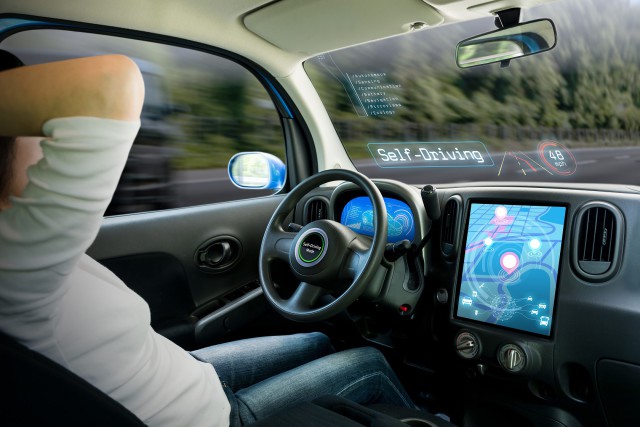
The driver of a self-driving car, when the car’s systems is doing the driving, will not be legally responsible for its actions, the Law Commission of England and Wales and the Scottish Law Commission have concluded in a joint report, with a whole new legal system needed as a result.
The report was commissioned in 2018 by the Centre for Connected and Autonomous Vehicles in 2018, is the summation of three rounds of consultation. Hundreds of stakeholders from the automotive sector and beyond provided input during the process.
The report says that “profound legal consequences,” will result when a car is able to drive itself for at least part of a journey without a human driver needing to actually control the car. With the driver ceasing to be the accountable entity for road safety, “new systems of safety assurance” will be required. A new Automated Vehicles Act is suggested that would enable the introduction of rules and a legal framework to help administer self-driving cars.
Once self-driving cars are on the roads, the report suggests that a new system of accountability will be required. Instead of a driver, the person in the driving seat would be a user-in-charge, with the vehicle backed by a authorised self-driving entity (ASDE) which would be the VM or software developer. When a vehicle drives itself without a user-in-charge, it will would be overseen by a licensed no user in charge (NUIC) operator. “It is expected, “said the report, “that staff in remote operation centres will respond to alerts from vehicles that encounter problems they cannot deal with, break down or become involved in a collision.”
While the user-in-charge would not be responsible for what happens when the car is in charge, the report suggests that systems are in place to tell the driver that they need to take over, with a transition demand being made that employs vibration, lights and sound.
Meanwhile, it is also recommended that senior managers at the ADSEs and NUIC operators face prosecution if information about a vehicle are incorrect or incomplete. “A senior individual must take responsibility for the accuracy of the information supplied and could face prosecution if it is incorrect or incomplete. Other senior managers could also be liable if they consented or connived at the offence.”
Thatcham Research was part of the consultation for the Law Commissions’ report. Chief Research Strategy Officer Matthew Avery commented: “The transition to safe introduction of automation with self-driving capabilities is fraught with risk as we enter the early stages of adoption. Today’s report is a significant step, as it provides important legal recommendations and clarity for the safe deployment of vehicles with self-driving features onto the UK’s roads.”
For more information, visit:
www.lawcom.gov.uk/project/automated-vehicles/
www.scotlawcom.gov.uk/law-reform/law-reformprojects/joint-projects/automated-vehicles/