


Unipart brake test deemed misleading
 4 July 2014
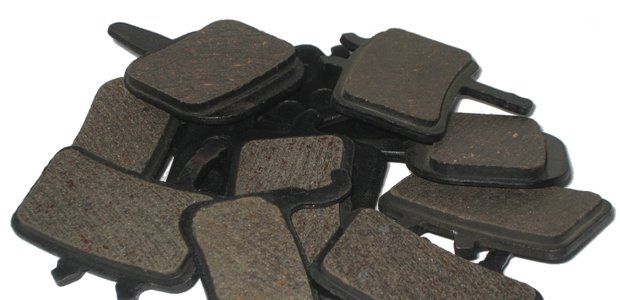
The Advertising Standards Authority has upheld a complaint about the Unipart Stop Secret survey, ruling claims as misleading.
The campaign included leaflets, a dedicated website and other media. However, the ASA has stipulated that advertising using the campaign must not appear again in their current form and has told the company to ensure comparisons were not likely to mislead in the future.
The complaint was brought by TMD Friction, which remained confident that its brake pads were not out-performed in the tests but chose not to conduct a counter-claim campaign. Instead it consulted with the ASA stating that the tests were not industry standard, had unrealistic methodology, and presented misleading data in the results. The ASA agreed with TMD Friction and upheld the complaints on the 12th of June 2014.
In its adjudication, the ASA stated: “The ASA noted the website featured text that stated “With Unipart pads fitted, the vehicle stopped up to a massive 32 metres before the competition! * That could be the difference between stopping safely and hitting something”, “With Unipart pads fitted, the vehicle stopped up to 10 metres sooner than competitors when bedded”, and “Unipart recorded best deceleration after the test, stopping up to 11.5 metres sooner than competitors”. The embedded video reiterated those results. The ad did not provide details of the stopping distances of the brake pads tested. The document that could be downloaded from the website provided a description of MFDD (Mean Fully Developed Deceleration) and featured text that stated “Important: Brake Pads which achieve the highest average MFDD recording have decelerated at a faster steady state, and will result in the shortest stopping distance”. The ad then quoted comparative figures for braking performance which were based on MFDD. Those comparisons were represented graphically.
“We considered consumers would understand the presentation of the ad to mean that the comparisons for braking performance that were based on MFDD related to the total stopping distances for each brake pad used in the tests.
“We noted Unipart Automotive’s belief that MFDD was an appropriate measure of braking performance, but were concerned that that measurement did not relate to the overall stopping distance, as the ad implied; rather it related to 70% of the braking process only. We were therefore concerned that the comparisons for braking performance that were based on MFDD did not relate to the total stopping distances for the brake pads used in the comparisons.
“The ad indicated that the ‘Performance Tests’ recorded the results of the brake stopping performance with a set pedal effort. We considered consumers would understand that to mean that each test was carried out with an identical pedal effort. Whilst the tests aimed to apply a pedal force of 40 dekaNewtons to the ‘Performance Tests’, we were concerned that the application of brake force was not identical for each test.
“For those reasons, we concluded that the comparison in the ads was misleading.”