


Ball joint health check
 22 January 2015
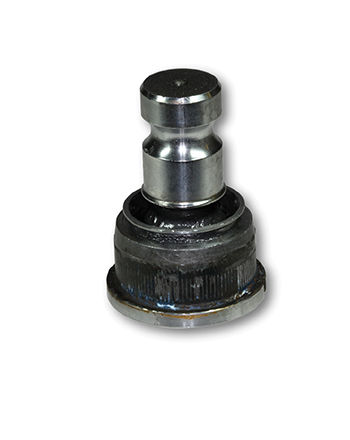
“The rapid development of automotive technologies means that as an industry we are thirsty for knowledge, education and training on the subject,” says UK marketing manager, Kevin Price.
“However, we must not forget about basic components; and remind ourselves of their importance and role. As pivotal components of a car’s suspension, ball joints are safety critical parts. For a safe drive, regular checks are vital and it’s imperative that both drivers and technicians are aware of the symptoms of a failing ball joint.”
Ball joints connect the car’s suspension system to control arms and steering knuckles and allow the suspension system to move while the vehicle is steered. The number and location depend on the make, model and type of system used.
Ball joints will deteriorate over time and will eventually wear out. If a ball joint fails it will affect the handling of the vehicle; the wheel’s angle alters, reducing control and the vehicle could come to an abrupt stop, damaging the tyres.
Regular inspections will help to ascertain when ball joints need replacing. The following symptoms could point to an unhealthy ball joint and ignoring these could put the driver and other road users at risk.
? A clicking or snapping sound when the wheel is turned; eventually becoming a squeaking sound when the brake is applied
? A knocking noise coming from the front end of the car when driving over small bumps
Sealed ball joints are lubricated at the source of manufacture, but standard ball joints must be kept lubricated. This can extend lifespan in older vehicles.
When changing a ball joint, it is vital that the correct tolls are used.
Figure 1
Figure 4
1. The spline isn’t visible and has filled with a thread locker fluid. If properly repaired, the ribbing would be clearly visible
2. Indicator of the thread locker fluid (blue colour)
TRW recommends that there are three ways to correctly remove and thus change a ball joint and make sure it isn’t canted (slanted or tilted).
1. Use a stand-alone hydraulic press to press gently, in one go, the correctly positioned ball joint into the track control arm.
Advantage: A stand-alone press is universal
? Disadvantage: To press the ball joint in, the track control arm has to be removed and re-fitted.
2. Use a mobile hydraulic press
? Advantage: fast repair
? Disadvantage: bigger investment
3. Fit a new track control arm equipped with bushes and ball joints
? Advantages: No investment in tooling, no risk of mounting the ball joint wrongly
? Disadvantage: track control arm has to be removed.
After this, the car will need to be realigned. This requires specialist tools and knowledge.