


Determine the cause: Fix the reason, not just the result
 9 November 2026
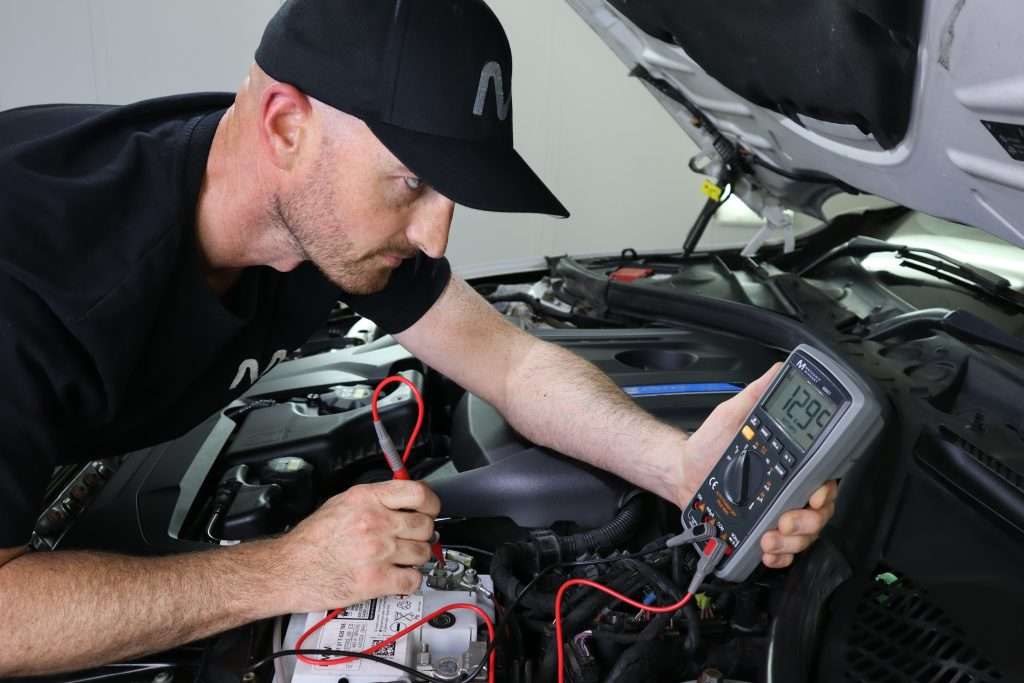
In the latest article in our series from Darren Quinn of Mechanic Mindset, we explore the fourth stage in the ‘FIXDIT’ diagnostic framework: ‘Determine the cause’. Other articles in the series can be found by following this link , with more to be published in the coming months.
Successful diagnostics depends on following a structured process. The FIXDIT framework provides a simple way to remember six essential stages: Find Evidence, Inspect Evidence, eXecute Diagnostic Plan, Determine the Cause, Implement Repair and Test.
In previous articles, we’ve gathered evidence, analysed it to develop a theory, and carried out structured testing to identify the fault.
Now we reach the fourth stage: Determine the cause.
Finding a failed component is an important achievement, but it doesn’t necessarily mean we’ve finished diagnosing the problem. There is still one critical question to answer:
“Why did it fail?”
Finding the fault isn’t finding the cause
Imagine diagnosing a vehicle with an inoperative cooling fan. After following a logical test plan, you identify a blown fuse. Replacing it restores operation, and everything appears to be working correctly. Job complete? Not necessarily.
The fuse failed for a reason. Perhaps the fan motor is drawing excessive current, the wiring has been damaged, or an intermittent short circuit exists somewhere in the system.
Replacing the fuse has corrected the symptom, but the underlying problem may still be present.
This distinction is fundamental to professional diagnostics.
A failed component is sometimes the cause of the customer’s complaint, but it may also be the consequence of another problem. Understanding the difference is what prevents repeat failures and unnecessary comebacks.
The power of asking why
One useful technique for investigating root causes is the ‘five whys’ method.
The principle is simple: repeatedly ask why something happened until you reach the underlying cause.
Consider a vehicle with inoperative rear lighting.
Why are the rear lights not working? Because the circuit has an excessive voltage drop.
Why is there excessive voltage drop? Because corrosion has developed inside a connector.
Why has the connector corroded? Because water has entered the electrical connection.
Why is water entering the connection? Because the rear light housing isn’t sealing correctly.
Why isn’t it sealing correctly? Because the seal was damaged during a previous repair.
Without investigating further, the technician might simply clean the connector and restore operation. However, unless the damaged seal is addressed, water will continue entering, and the fault is likely to return.
The five whys isn’t about asking exactly five questions every time. It’s about continuing the investigation until the underlying cause is understood and supported by evidence.
Look beyond the failed component
Root cause analysis often requires looking beyond the system where the symptom appears.
A failed alternator might be the result of oil contamination from a leaking engine seal. Repeated wiring failures could be caused by an incorrectly routed harness rubbing against a bracket. In both cases, replacing the failed component alone may only provide a temporary solution.
This is where the evidence gathered during the earlier FIXDIT stages becomes particularly valuable.
Vehicle history, previous repairs, environmental conditions and the results of the full function test may all help explain why the failure occurred.
Sometimes the most important evidence isn’t found in the failed component itself, but in the conditions surrounding it.
Don’t assume every failure has a hidden cause
There is also an important balance to maintain. Not every component failure is the result of another fault. Components wear out, materials deteriorate, and electronic devices can fail internally.
The objective isn’t to invent an elaborate explanation for every failure. It’s to establish whether the failure was caused by an external influence, normal deterioration, incorrect operation or another underlying problem.
For example, a motor with worn brushes may simply have reached the end of its service life. However, a motor repeatedly failing shortly after replacement deserves a much deeper investigation.
Good root cause analysis is evidence-led, not assumption-led.
Learning from our own mistakes
Sometimes the underlying cause can be traced back to a previous workshop repair.
A connector left unsecured, a wiring harness routed incorrectly, or a missed calibration procedure can all create future problems.
These situations aren’t always comfortable to investigate, but they provide valuable opportunities for improvement.
If the root cause was an incorrect repair procedure, perhaps technical information wasn’t consulted. If contamination caused a failure, perhaps cleanliness procedures need reviewing.
The objective shouldn’t be to assign blame. It should be to understand what happened and prevent it happening again.
A workshop that learns from its failures becomes more efficient, more consistent and ultimately more profitable.
Diagnostic insight
When you identify a failed component, ask yourself:
“Is this component the cause of the problem, or is it another symptom?”
That question can be the difference between a successful first-time repair and a vehicle returning with exactly the same complaint.
FIXDIT Takeaway
Don’t just identify what failed. Understand why it failed.
By the end of the Determine the Cause stage, you should understand the failure mechanism and have enough evidence to decide what needs repairing, replacing or correcting.
In the next article, we’ll explore the ‘Implement repair ’ stage, where we turn that understanding into a professional, reliable repair.
Because diagnosing the fault correctly is only part of the job.
Making sure it doesn’t return is what completes the solution.
To download a copy of the FIXDIT guide, and explore the framework in more detail, simply follow this link.