


Putting pressure on a Polo
 7 December 2017
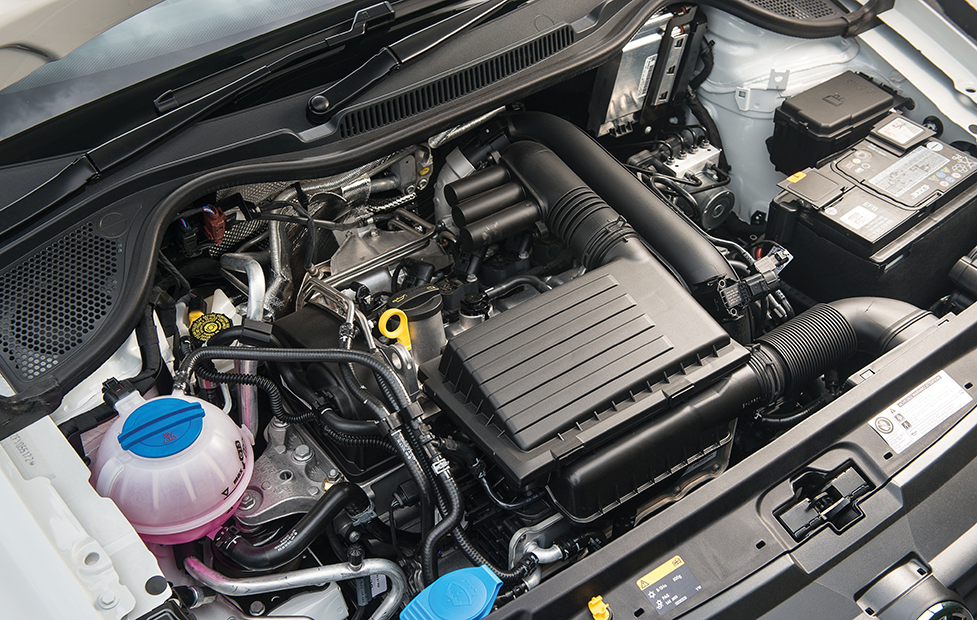
I have always tried to express the importance of logic and process in any diagnostic challenge. Added to this foundation training principle should be common sense and simplicity.
With this in mind, I walked into the workshop last week noting a Volkswagen Polo with a misfire. It was familiar, and I recalled that this particular vehicle had recently been serviced by us, with the customer explaining of an intermittent misfire.
As I stood there, our technician was explaining his intention to replace the coils. I gave into a certain incurable habit I have, to the annoyance of all; I asked WHY? The response was vague, which confirmed that not enough testing had taken place.
By now my passive visit had already turned into an intrusion and was fast becoming an interrogation. I started with the recent known history. New sparking plugs had been fitted, and one of the three coils had been replaced when the service was carried out.
Prime causes
The error code, originally and in this case, related to an intermittent misfire on cly 2. I recall explaining recently the three prime causes of incomplete combustion, often worded misleadingly as a misfire.
- Ignition errors
- Fuelling errors
- Mechanical errors
With easy access to the coils I suggested a simple but effective coil test using a dummy plug adaptor. The two basic functions of the ignition system are to create sufficient electrical energy to completely burn the air fuel charge, and to deliver it without loss or leakage. The coil energy test qualifies both the above. This simple non-technical test confirmed that all coils were fully serviceable.
The next suggestion was to conduct a simple but very effective mechanical cly balance test using Pico diagnostics. This test compares the voltage drop against rotation frequency whilst cranking the engine. The test immediately identified a cylinder with 66% relevant compression. This is significant as it points to internal mechanical faults. At this point we don’t know which cly or more to the point, why.
Real time pressure
Based on this evidence I needed to conduct a much more focused and accurate test of mechanical internal function. The chosen and well-established method is to run the engine and observe real time pressure differential over the 4-stroke cycle. To do this the Pico WPS transducer is fitted to each cly in turn with the engine running at idle. The main advantages of this method over a traditional compression gauge is that all pressures above and below atmosphere are shown in real time. With a closed throttle, engine pumping losses are relatively high; this helps to assess any cylinder leakages over the complete cycle.
A common problem with this 3cly engine variant is worn valve guides. This has little effect at higher engine speeds, some of which is due to quicker cylinder cycle times and lower pumping losses. The powertrain PCM monitors the combustion anomalies, and eventually decouples the fuel injector on the faulty cylinder. This may have explained the intermittent nature of the reported fault.
Common sense
It is very interesting to note the response of most technicians when they view very low compression values. So why is this? With a closed throttle, the volumetric efficiency is very poor. Put simply, the piston cannot compress what it has not drawn in. We suffer the same problems, as oxygenating our blood for maximum effort requires an open, not closed mouth.
In our case, no2 cylinder was 3.25bar no1 4.35 no3 4.15, seemingly confirming the initial relative compression test. So, we had a problem that’s mechanically related. you may have also noted no tests or assessments have been carried out to the injectors.
This is the common-sense part; Given the age and value of the vehicle I predicted that repairs would not be authorised. If they were then testing could be done at the manifold removal stage.
Pressure
Another good tip to increase the pumping losses to further challenge the cly seal is to accelerate the engine at high speed and snap the throttle shut. Then capture the data and note the increase in pressures below atmosphere. Note virtually no compression and little air drawn in.
The forces acting on the piston during the intake stroke increase, and the result is in effect an air spring increasing the pumping losses. This principle is employed with cylinder select actuation, where all valves remain closed. You may be wondering what happens to the lost energy during intake? The answer is that most of it is returned on the compression stroke.
The basis of cylinder select is this; Accept the engine is inefficient at low torque; Close throttle; Turn off some cylinders. The remaining cylinders now operate on a wider throttle opening, therefore reducing pumping loss. Don’t just take my word for it; American heavy bomber crews in the Second World War used the same principle when the discovered that turning off one engine increased their operating range.
Want to know more?
Contact Annette at ads for details 01772 201 597 or visit autoinform.co.uk