


Why ‘take it easy’ could be bad brake advice
 11 November 2026
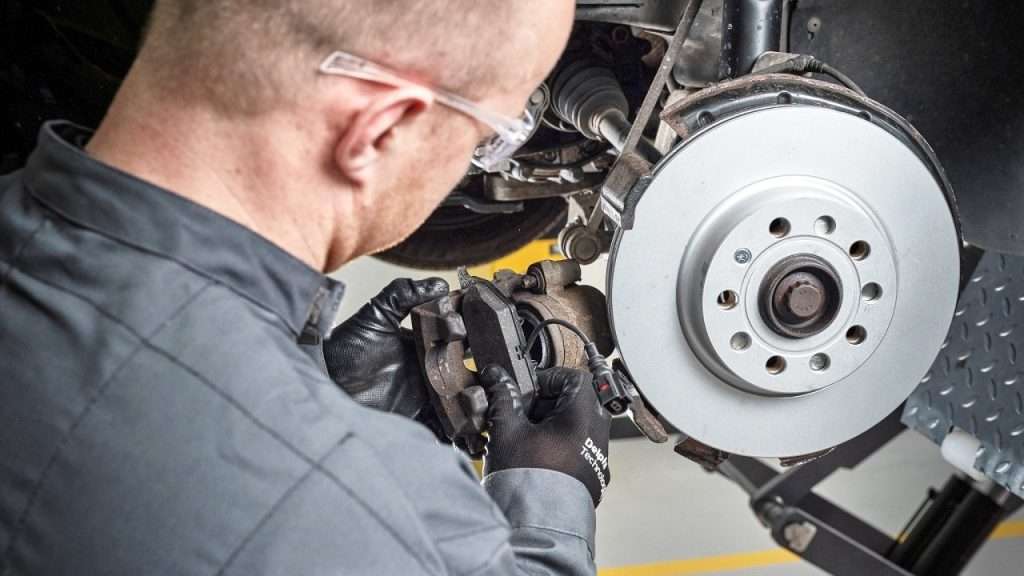
David Guilfoyle, Technical Training Manager at Delphi and Top Awards judge, looks at how regenerative braking is changing the way friction brakes are used, and why the traditional approach to bedding in new pads and discs may need a rethink.
Just take it easy for the next couple of hundred miles.
Sounds like good advice from your trusted local garage. If you’re a time-served technician, you’ve almost certainly told a customer that at some point. Maybe you stopped saying that a few years ago, but if you’re still saying it today, I want you to consider whether that advice still holds, or if it’s become bad advice.
Think about a modern Battery Electric Vehicle (BEV) or Hybrid Electric Vehicle (HEV or PHEV) with good regen, where every time you take your foot off the pedal, the vehicle is braking for you. This is often referred to as one pedal operation. That braking effort is not created by using the friction braking system, but via the electric motor recovering energy and charging the high-voltage battery in the process.
On vehicles not fitted with an electric motor, this energy would be wasted and turned into heat by the friction brake system. Even mild hybrid vehicles (often sold as petrol) fitted with 48v batteries have some regen capability; the electric motor is far smaller and, being a replacement for a conventional alternator not directly connected to the drivetrain, therefore this is far milder and certainly doesn’t feel like a one pedal system like in a BEV. On vehicles like this, braking using the friction braking system is greatly reduced both in frequency of use and severity of use. It would be possible in a BEV with one-pedal operation to cover hundreds of miles on multiple journeys and effectively not use the friction braking system at all.
So, here’s the scenario. You fit a brand-new set of pads and discs. As we’ve established, you’re a good technician, so you use the correct brake grease in the correct areas, you torque all the bolts to the correct setting, and you even ensure that the hub mating surface looks like new parts because you invested the time into cleaning the surfaces to prevent a return job for brake judder. Then when the customer collects their vehicle, you say those words.
“Just take it easy for the next couple of hundred miles.”
Then two or three weeks later the vehicle is returned with squealing brakes. What do you do? Phone your parts supplier and give them grief about the high-quality parts they sold you? Maybe you take the vehicle back in for free and inspect it; dust off the DTI Gauge and measure the runout. Maybe you replace them at your own cost to save hours of mucking around?
But what really happened? The only braking the customer did that made the friction brake do anything was heavy braking. The first time the pads generated any heat, they were abused and became glazed. This can cause loud squealing noises, reduced braking capability, and, in severe cases, even slight brake judder.
So, what does a great technician do on modern braking systems? Brake burnishing, or as it’s commonly known, bedding in the brakes, is now a crucial part of pad and disc replacement, with a number of manufacturers having prescribed procedures.
A few things happen during a brake burnishing session.
One is to heat cycle the friction material. The friction material’s friction coefficient is more stable and consistent once it has been heat cycled.
Second is to conform and match the microstructure (peaks and troughs) of the friction material and disc friction surface so there is full contact.
Third is to provide a uniform friction-material transfer layer onto the disc friction surface.
There are two main types of friction – adhesive and abrasive. Abrasive is like sandpaper, so you get the most wear/dust. Adhesive friction occurs when a microscopic transfer layer of friction material deposits evenly onto the disc; the breaking and reforming of these bonds creates the friction coefficient.
Pads typically operate between modes, but the transfer layer is vital for adherent friction. Abrasive friction is important to keep the discs in good condition and remove any surface corrosion.
What’s involved
So, how do you carry out a brake burnishing session?
The routine manufacturers recommend may differ from one another and maybe even model to model, with factors such as vehicle weight, brake size and fuel type causing variation. However, there are some pretty standard points that most manufacturers will stick to.
- While bedding your brakes, avoid braking down to zero. The lower speed isn’t important; the important part is NOT braking all the way to a standstill. This is because during bedding there is a greater chance of uneven friction material transfer onto the disc.
- Avoid very heavy braking where the ABS may operate. 0.3G of deceleration and 30bar pressure at the master cylinder is considered moderate braking.
- Avoid very high speeds. In England this is legally easy – whereas in Europe or if bedding brakes on a circuit, higher speeds may be more easily achieved. Typically, going from 60-70mph down to 30-50mph is the norm for most manufacturers.
Conclusion
Technology in the automotive industry is developing quickly. As with all developing technology, maintenance and repair also change. A good garage 20 years ago looks very different from a good garage today; a big part of that change is how work is carried out. Regardless of the fuel type, cost or brand of the vehicle, a good garage today ensures that all work is carried out correctly, following manufacturers’ guidelines and ensuring safety, firstly for the occupants but also for the vehicle itself.
So what does carrying out work correctly look like in a modern garage?
There are many answers to that question, but a key one is understanding how modern technology differs and appreciating the need to work differently.
A garage that can avoid the pitfalls of rapidly evolving vehicle technology by working intelligently is well on its way to being a good garage.
And for customers with EV’s, particularly those with strong regenerative braking systems, it should no longer be acceptable to hear advice such as, “just take it easy for the next couple of hundred miles.”
One brake burnishing process does not fit allIf we look at Tesla’s formalised routine to compare the brand’s two saloon cars, we will see a difference in speed and the number of times a braking event needs to take place. The vehicles differ in size, weight, and performance, with the Model S being bigger and heavier, and often having more power depending on the specifications compared. Model S: At 46mph, apply 20-40 Bar pressure ten times (2100kg average vehicle weight) Model 3: At 50mph, apply 20-40 Bar pressure 18 times (1750kg average vehicle weight) Looking at Mercedes Benz brake burnishing advice for AMG models, there are interesting differences between the vehicles fitted with semi-metallic and the carbon-ceramic brake pads. AMG models with semi-metallic brakes have a two-step process. Step 1: Low-speed bedding: Accelerate to approximately 35–40mph. Apply firm, medium pedal pressure to smoothly slow the vehicle down to about 5mph. Repeat this process five to ten times consecutively to build initial heat. Step 2: High-speed bedding: Increase your speed to 45–50mph. Firmly apply the brakes to slow the car down to 10mph. Do not engage the ABS or bring the car to a complete stop. Repeat this cycle five to seven times. Mercedes Benz AMG models with carbon-ceramic brakes require a completely different process. Brake temperatures need to be below 40°C. Then apply firm, smooth pedal force from 50mph to 30mph at approximately 0.3G using the vehicle’s G-force meter in the menu. Repeat ten to 12 times in rapid succession. After the brake events are finished, the brakes need to be fully cooled by driving for 15 miles uninterrupted to allow the brake system to cool correctly. It is important that during the brake burnishing, the vehicle does not come to a complete stop. The difference is due to carbon-ceramic brakes requiring precise heat cycling to achieve correct transfer of pad material; if this is not done correctly, uneven deposits of pad material can cause brake judder or poor performance later. |
www.delphiautoparts.com