


Building the better garage
 13 October 2022
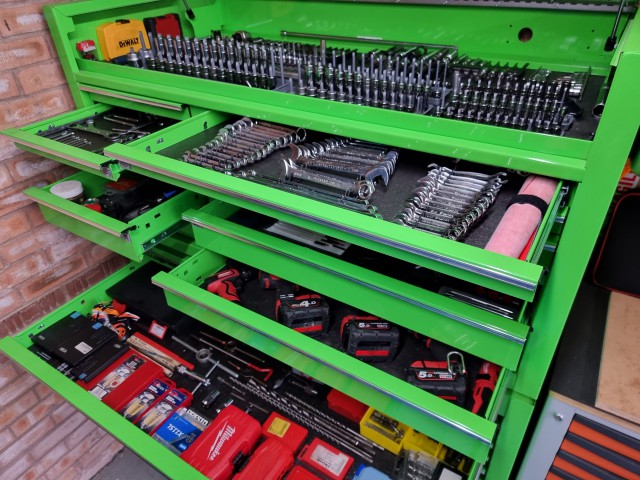
Diagnostics will never be simple. In fact, for many reasons it is getting more difficult. So, in this issue of Aftermarket and the next, I will strip back as much of the complication as possible, focusing on the building blocks that are the very foundation of a successful diagnostic service. I am confident there will be something of interest to those at all levels of knowledge and experience. I am going to begin with the most important decisions you must make.
Who have you identified as your target customer base? What level of service do you intend to offer? These two questions are more complex than you may imagine, and the answers will dictate the technical level of competence you or your employees must attain. They also dictate the spectrum of specialist tools you require and to a certain extent the aesthetics and location of your workshop.
For many years I practiced diagnostics across every vehicle make and engine configuration, from carburettors to mechanical and electronic injection systems. This proved phenomenally successful for more than two decades. However it became ever more obvious that we at ADS had to specialise with a brand identity.
In the early years, 1985-2010, we could access all the vehicle data and functionality required to conduct and complete a repair. The challenge, then as now, was accessibility to the vehicle software suite.
The VMs have always been resistant to independents repairing their vehicles. One by one, the leading serial platform manufacturers were forced to withdraw component programming and other functionality. I am sure you all knew them. They provided us with an excellent living over many years. The king is dead, long live the (VM) king.
Due to our reputation and success in vehicle diagnostics it became inevitable that we would take on the franchised dealerships, expanding our client vehicle parc with newer models. Many years ago, I categorised the industry as a triangle, with 10% operating at dealer level, 35% aspiring to join them, and 55% content to service and repair older vehicles. No disrespect intended guys, as I will explain later.
High-end diagnostic business
Post-2010, my son David started to take over the running of our business. He quickly identified that despite my confidence in operating a high-end diagnostic business, it was in fact a financial mistake. We appealed to trade work more than direct contact with retail owners, as they would take their vehicles to a regular garage first.
To qualify my previous comment over respect, David has since acquired two further garage businesses that only service and repair older vehicles, at eight-years plus. Both of my cars are eight years old, because I do not want the unnecessary technology or cost with current new vehicles. That may help you understand how I succeeded in simplifying diagnostics. More on this later.
Control cost and price
The first rule from my diagnostic boot camp; You must keep control over your chosen process, tools and working environment, you must also control the cost of the repair, as opposed to the price.
The cost of a repair cannot be manipulated. It is made up a number of components; The time taken for a methodical, efficient and durable repair, OE-quality parts, the application of specialist tools (this includes hidden costs for software and database access) and the cost of doing business
On the other hand, the price can certainly be manipulated with inefficient process, unnecessary, sub-standard, or second-hand parts fitment, lower labour rates due to duress from owners, or the most common reason I am given; “We can’t charge that rate in this area.” A pint of milk or a litre of fuel cost the same wherever you live. The price you are charged though, that is a different matter.
You may also be sacrificing profitability with unnecessary discounting of parts or choosing ‘low-cost’ parts with a lower margin. Then there are customers supplying own parts, or insisting on partial repairs. All of these become your liability. Sadly, the use of unskilled labour still rears its ugly head in our industry and will persist until professional licencing is mandatory, as with gas and electrical engineers.
The customer has a choice, in accepting or rejecting your offer of a repair contract. The cost of doing business is the essence of your business profile. It defines your position in the market, the skill of you or your employees, the tools you use, and your infrastructure. At its zenith, it may offer a better service that franchised dealerships.
As professionally qualified precision engineers, we at ADS often strip, repair and re-engineer parts, as well as re-thread, heli-coil, test and service injectors. On top of that, we offer prompt pinpoint diagnostics. These techniques are not allowed by VW dealers, so increase our net cost and parts requirement.
Incredible demand
Where is ADS post-2010 and how have we evolved with the challenges that our trade presents? We are 90% a one-manufacturer independent garage, covering the Audi, VW, SEAT and Skoda marques under the VAG umbrella, with spin-off brands such as Bentley, BMW, and Mercedes-Benz. Our biggest markets are servicing, repairs, tyres and performance upgrades. No, we do not do, CAT, DPF and EGR deletes.
Putting our specialist services aside, there has been an incredible demand for specialist servicing tools, timing belts, suspension, brake servicing, HVAC, diesel SCR, steering geometry, headlight and lane assist calibration. Most of these basic services now require access to the VM’s serial platform. There are some very capable independent serial platforms, we use several daily. You must choose wisely, considering who your competitors are, and more importantly who you want to leave behind.
Next month, part two will look at the specific technical process, with the focus very much on diagnostics, with a peep in our secret cupboard.