


Know your fluid
 15 February 2013
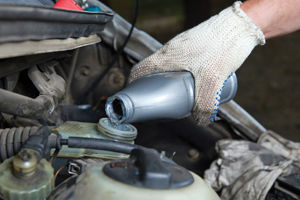
Research has shown that many drivers are motoring with contaminated brake fluid – but how would they know and more importantly, how do we know to tell them?
Simply put, there are two types of fluid – namely, glycol based and silicone based. These types should never be mixed so if the type of fluid in the system needs changing, you should perform a thorough flush. Glycol fluids are ‘hygroscopic’ – in other words, they absorb water. Silicone fluid does not but it is more compressible.
Brake fluids are available in different specifications, according to American Department of Transport requirements, which is why the bottles have the word DOT and then a number printed on them. Liquids are generally incompressible while gasses are compressible and because of this, when brake fluid boils (and becomes a gas) it will be unable to transmit pedal force to the calipers. This will reduce the efficiency of the brakes. Typically, brake fluid will only boil during prolonged braking but this can be a problem if the brakes are ‘dragged’ while going down a very long incline.
A moisture content of just 3% can reduce the boiling point of brake fluid by almost a third. As a general rule of thumb, brake fluid needs to be changed if the boiling point is anything less than 200°c. There was talk a few years ago of including brake fluid tests into the MOT but VOSA have ruled this out. However, performing this check with the correct tool is relatively easy to do and can be performed on just about anything that goes through your garage. If it means that you spot just one vehicle a month with dangerously contaminated fluid then you have performed a very useful service indeed.